Every great landscape has its mythology — and Cappadocia's is among the richest in the world. For thousands of years, the extraordinary visual language of fairy chimneys, rose-red valleys, and cave-riddled cliff faces has inspired explanation, legend, and story. Understanding the folklore behind the landscape adds a dimension of cultural richness to any visit.
**The Origin of 'Fairy Chimneys':**
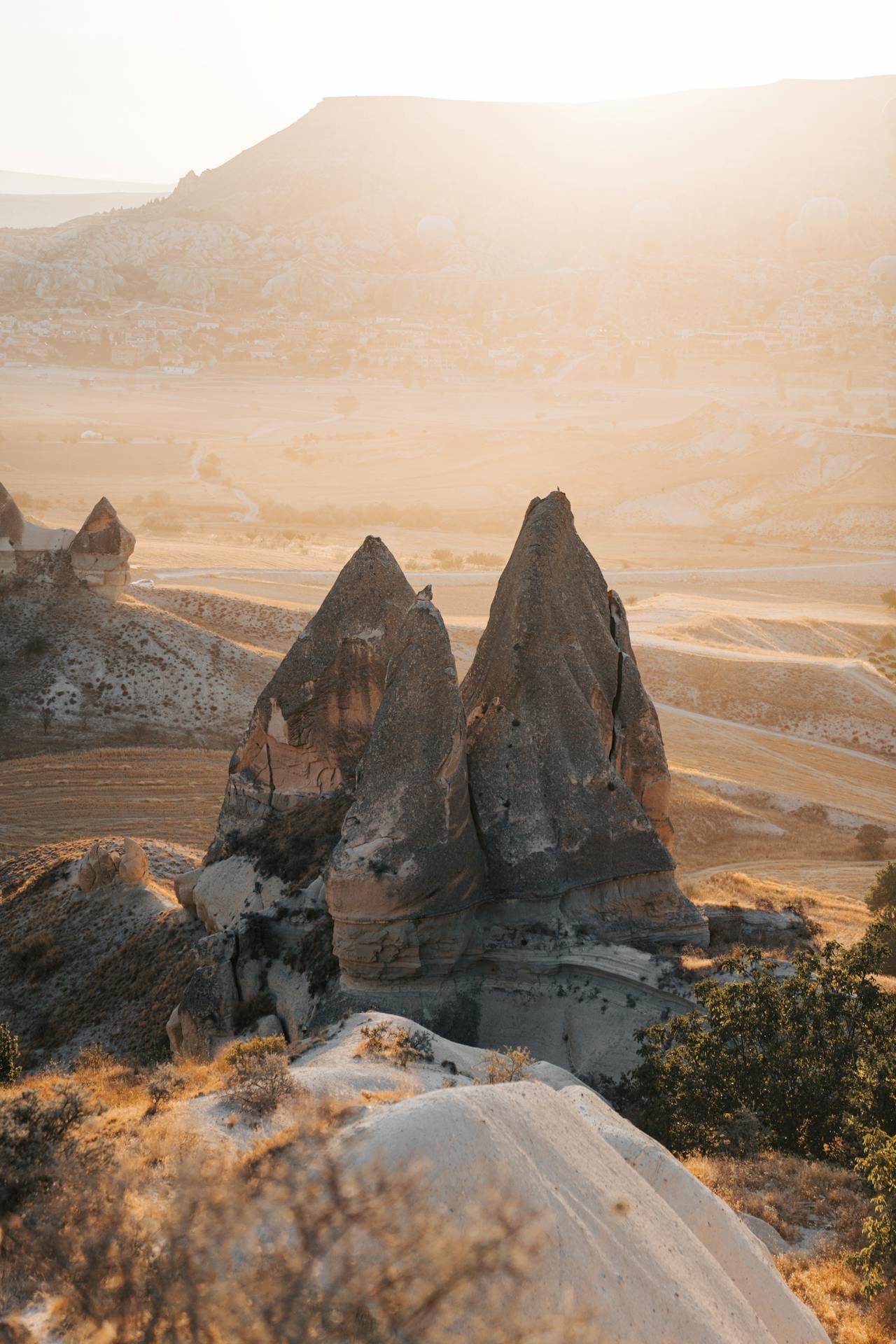
The Turkish name for these formations is peri bacaları — literally 'fairy chimneys' or 'fairy stacks'. The name itself reflects a widespread folk belief that the formations were not geological but magical in origin. In traditional Cappadocian belief, the peri (fairy or spirit — derived from the Persian word for benevolent supernatural being) were thought to inhabit these rock formations, emerging at night to dance in the valleys. The pointed caps of the mushroom chimneys, in particular, were associated with the conical hats worn by fairy beings in Anatolian folk tradition.
In another popular tradition, the chimneys were said to be the petrified forms of giants who had offended the gods — frozen mid-stride in their stone columns as punishment for hubris. The multi-headed chimneys of Paşabağı were particularly associated with this legend; their unusual form suggesting a single giant torso with multiple supernatural heads.
**The Pigeon Houses (Güvercinlikler):**
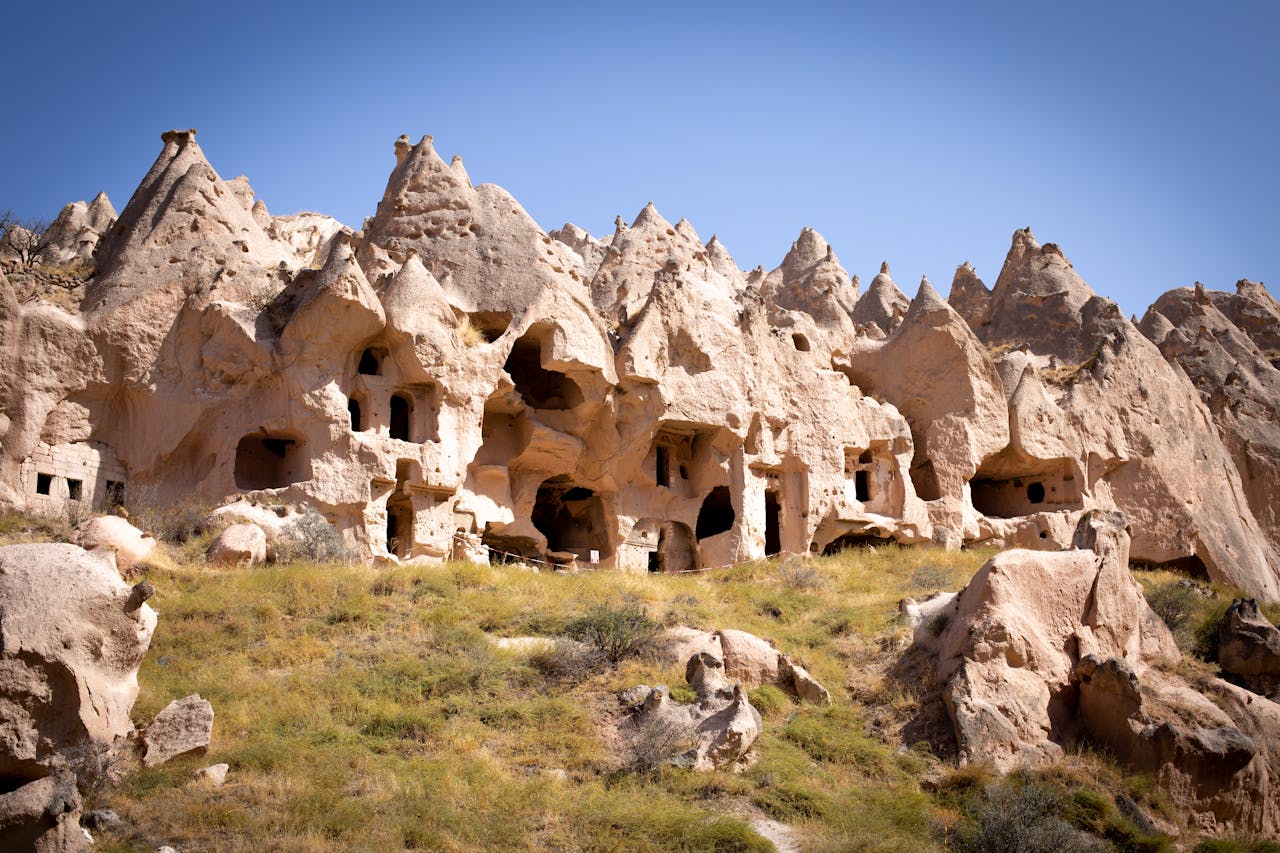
One of the most visually distinctive features of the Cappadocian landscape is the hundreds of small carved niches and elaborate facade carvings that pepper the cliff faces of every major valley — particularly visible along the Güvercinlik (Pigeon) Valley between Göreme and Uçhisar. These are güvercinlikler — pigeon houses — and they tell a remarkable story about the ingenuity and agricultural intelligence of Cappadocia's people.
Pigeons were raised in Cappadocia for a single primary purpose: their droppings (güvercin gübresi) were used as a highly effective natural fertilizer for the volcanic soil. In a region where the soil was mineral-rich but relatively thin, the accumulation of pigeon guano over centuries was genuinely valuable — wealthy landowners competed to have the most elaborate pigeon-house façades carved into their valley cliffs, since more decorative and accessible niches attracted more birds. The cliff faces of Pigeon Valley are effectively the 'bird hotel' architecture of medieval Cappadocia, and the social status dimension of the more elaborate carvings is fascinating.
Beyond fertilizer, pigeons were also used to carry messages between the rock settlements — an early form of postal communication that connected the isolated valley communities.
**The Monasteries and the Devil's Cave:**
Several of Cappadocia's cave monasteries have local legends attached to them. The most famous is associated with Çavuşin's old rock-cut church: according to local tradition, a devil was imprisoned in the cave behind the church's altar by a saintly monk who outwitted it through prayer and cleverness. The stone used to seal the devil in the cave — a large, suspiciously door-shaped rock — is still pointed out to visitors today.
**The Underground City Legends:**
The discovery of Derinkuyu underground city in 1963 by a local man renovating his home spawned its own mythology. Local oral tradition, preserved over centuries without knowledge of the city's scientific explanation, had long spoken of 'the other world below' — a parallel underground realm inhabited by ancestors or supernatural beings that could be accessed through certain cave entrances. When the underground city was actually discovered, many local inhabitants felt their tradition had been confirmed rather than replaced.
· 3 min read
Pigeon Houses & Fairy Chimney Legends: The Folklore and Myths of Cappadocia
From fairy chimney origin myths to the pigeon houses carved into Cappadocian cliffs, the region's folklore is as rich and layered as its geology. Discover the stories behind the stones.
Your stay
Let the story continue — in a cave of your own.
Wake to fairy chimneys, breakfast in the courtyard, the valley at your door.
Check availabilityKeep reading