The landscape of Cappadocia is not merely beautiful — it is a geological epic, the visible record of some of the most dramatic natural forces that have ever shaped a region on Earth. Understanding how it formed adds an extraordinary dimension to the experience of being here: the fairy chimneys are not decoration; they are the product of a geological story stretching back 10–12 million years.
**The Volcanic Foundation:**
Cappadocia's story begins with a series of massive volcanic eruptions from the Erciyes, Hasandağı, and Güllüdağ volcanoes — all still visible on the horizon today, though long dormant. Over millions of years, these eruptions blanketed the Anatolian plateau in deep layers of volcanic ash, lava, and pyroclastic material that hardened into the rock we call 'tuff' (tufa). Tuff is a relatively soft, porous rock — easy to carve, easy to erode, and crucially, varying greatly in density and hardness depending on the composition of the original volcanic deposit.
**The Role of Erosion:**
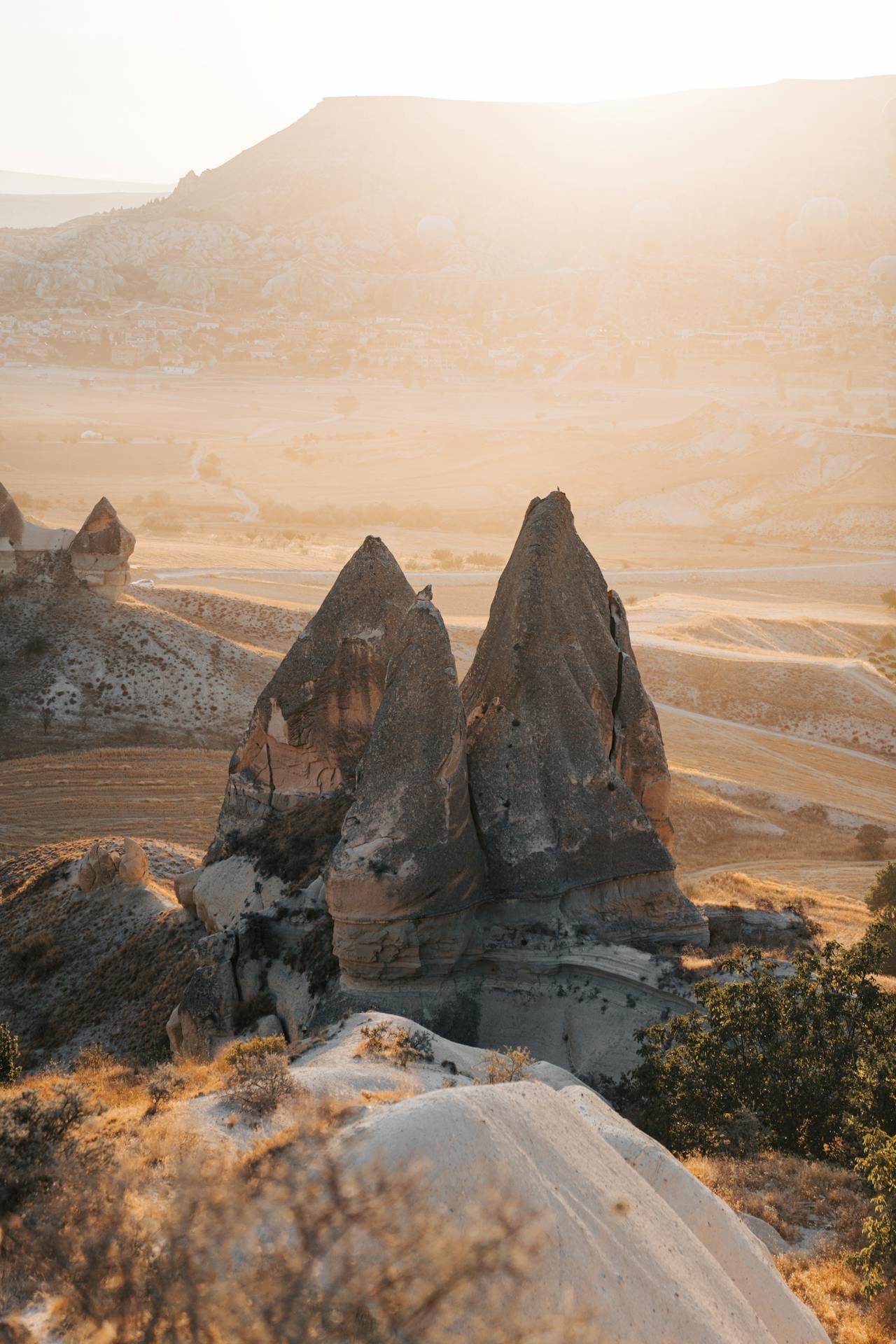
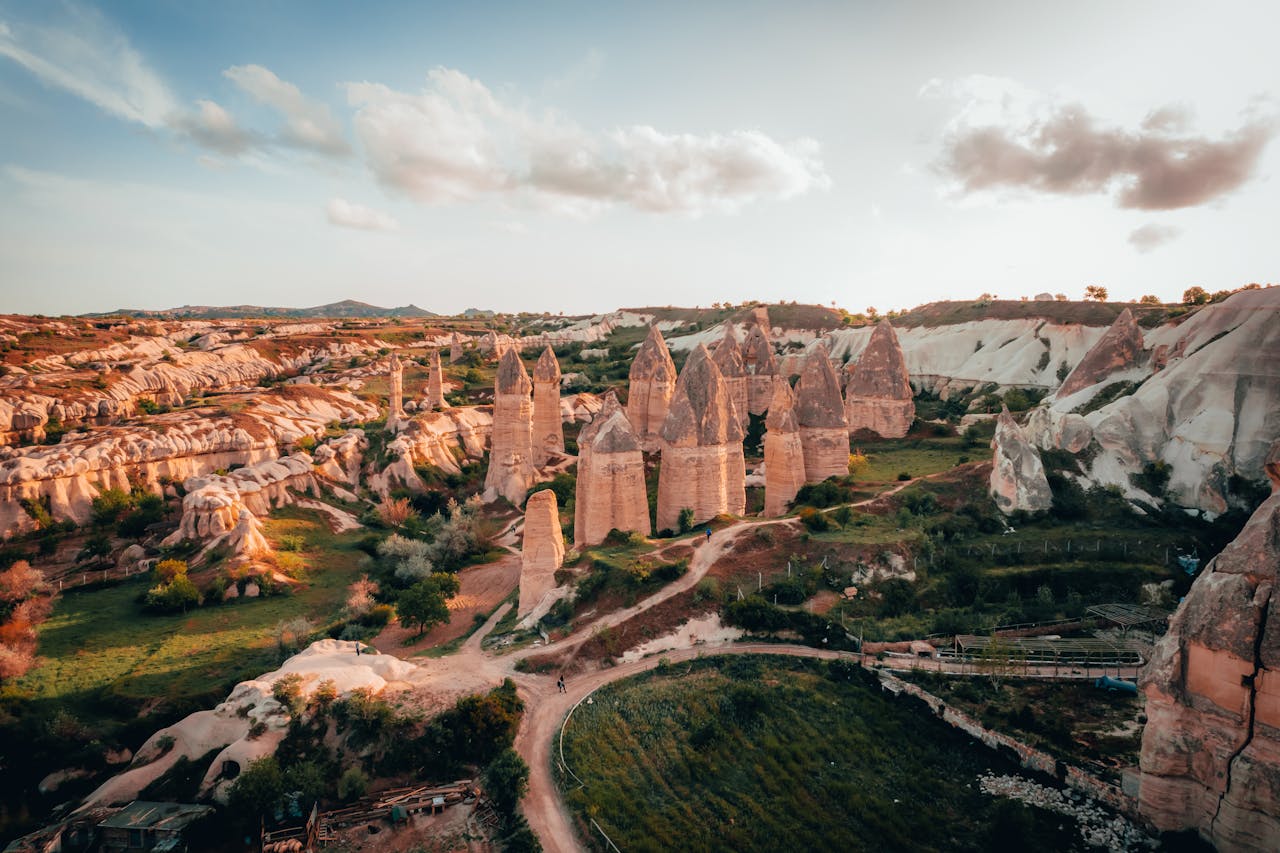
Once the volcanic activity ceased and the tuff had hardened, the forces of erosion — primarily wind and water (rain and seasonal streams) — began their millions-of-years work of sculpting. Because tuff is soft, it erodes relatively quickly. But here is the key to the fairy chimney: in many areas, the top layer of tuff is capped by a harder, denser volcanic rock (often basalt or a harder lava formation). This hard cap protects the soft tuff column beneath it from the rain and wind that erode the surrounding landscape.
As the valley floors drop over millennia, the capped columns stand progressively taller relative to their surroundings — creating the distinctive mushroom-shaped or cone-shaped formations we call fairy chimneys. Eventually, the erosion process will undercut the cap, and it falls — leaving a simple conical spire that will itself be slowly eroded away.
**The Colors of Cappadocia:**
The extraordinary range of colors in the Cappadocian landscape — the white, grey, and cream of the tuff; the deep iron-red of Kızılçukur Valley; the rose-pink of Güllüdere Valley; the yellow-ochre of Devrent Valley — all reflect variations in the mineral content of different volcanic deposits. Iron oxide gives the Red Valley its vivid crimson. Manganese compounds produce the grey-blue tones. The pure white formations contain the highest proportion of silica-rich volcanic ash.
**Fairy Chimney Types:**
There are several distinct types of fairy chimneys in Cappadocia:
- **Cone chimneys:** The classic form, like an elongated dunce cap.
- **Mushroom chimneys:** Broader at the top due to the erosion-resistant cap; the most famous example is in Paşabağı.
- **Column chimneys:** Tall, narrow pillars formed where the surrounding rock has been almost entirely eroded.
- **Complex formations:** Animal-shaped or human-shaped formations like those in Devrent Valley, where erosion has created irregular, sculptural forms.
The unique geology of Cappadocia also created its underground world. Tuff is so soft and workable that ancient peoples discovered they could carve entire rooms, tunnels, and cities into it using basic hand tools — a geological gift that directly shaped the human history of the region.
· 3 min read
How Did the Fairy Chimneys Form? The Geology of Cappadocia Explained
Cappadocia's fairy chimneys and surreal valleys are the result of millions of years of volcanic eruption, erosion, and geological transformation. Discover the science behind the magic.
Your stay
Let the story continue — in a cave of your own.
Wake to fairy chimneys, breakfast in the courtyard, the valley at your door.
Check availabilityKeep reading