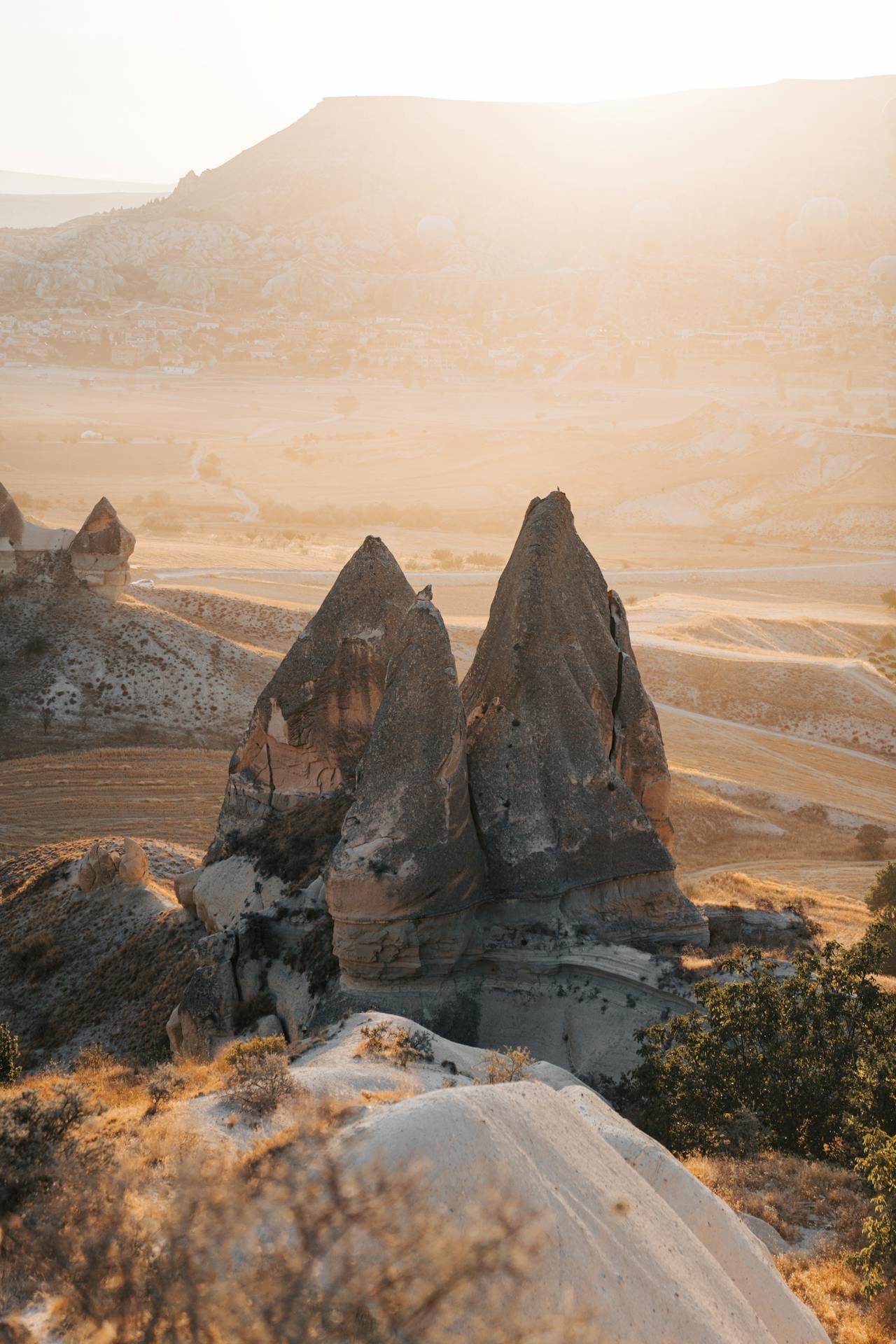
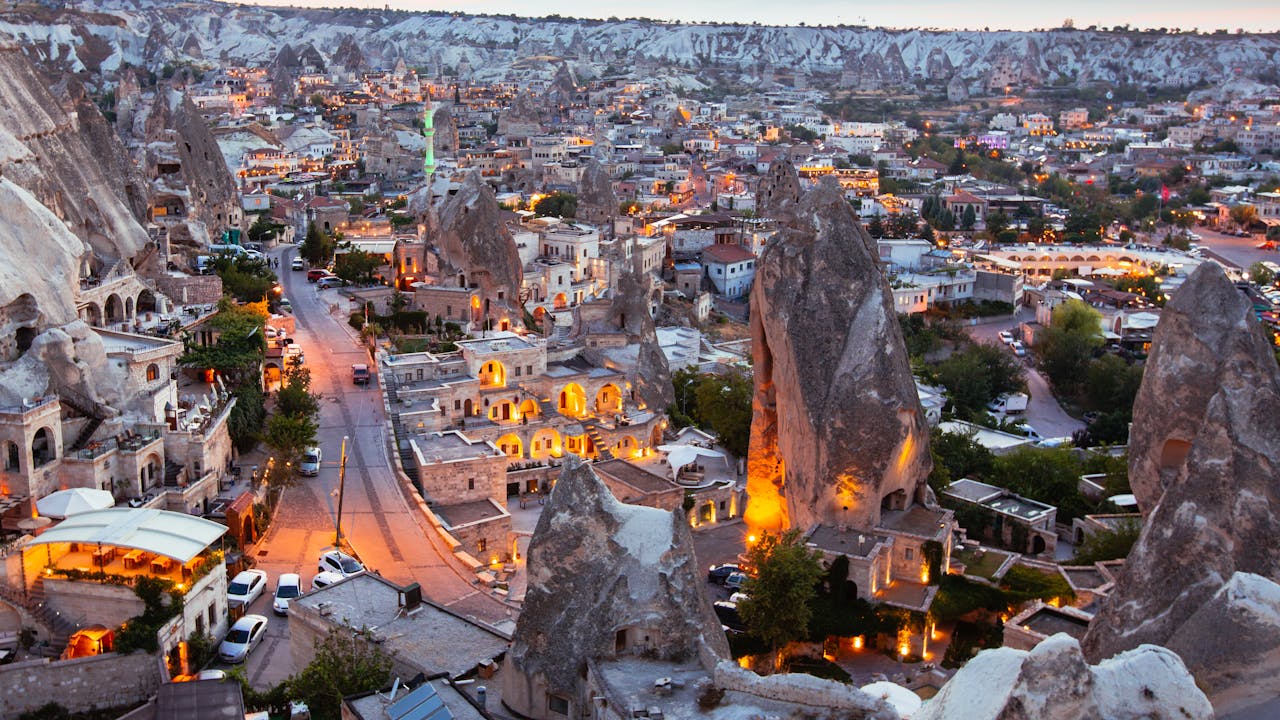
Just a few minutes' walk from the center of Göreme lies one of Turkey's greatest open-air treasures: the Göreme Open Air Museum, a UNESCO World Heritage Site that immerses visitors in the artistic and spiritual world of Byzantine Christianity. Carved into the soft volcanic tuff of the Göreme valley between the 10th and 13th centuries, this extraordinary complex contains over 30 rock-cut churches and chapels, each decorated with frescoes of astonishing color, detail, and devotion.
The museum was once an active monastic community, housing hundreds of monks and nuns who lived, prayed, and created art in this landscape of stone. As you wander between the carved façades, you move through centuries of history with each step. The most celebrated churches include:
**The Dark Church (Karanlık Kilise):** Despite its name, this is the brightest jewel of the museum. Its interior is covered in some of the best-preserved Byzantine frescoes in the world — deep blues, rich ochres, and vivid reds depicting scenes from the life of Christ. The church was sealed for centuries, protecting its frescoes from light damage. A small additional entrance fee applies but it is absolutely worth it.
**The Apple Church (Elmalı Kilise):** Named for a presumed apple tree that once stood nearby, this church features beautiful frescoes depicting the Crucifixion, the Nativity, and various saints. The vaulted ceilings are a masterwork of 11th-century sacred painting.
**The Snake Church (Yılanlı Kilise):** Famous for its unusual fresco depicting St. George slaying a snake-like creature, along with images of the Emperor Constantine and his mother Helena.
**The Sandal Church (Çarıklı Kilise):** Named for the footprint-like marks on the floor, believed to be the imprints of Christ. Its frescoes are vivid and unusually well-preserved.
Beyond the churches, the museum includes refectories (communal dining halls) with stone tables long enough to seat an entire monastic community, wine cellars, and dovecotes.
Visiting tips: Arrive at opening time (8:00 AM) to enjoy the museum before tour groups arrive. The site is quite walkable but uneven — solid footwear is recommended. A combined ticket includes the Tokali Church, located just outside the main entrance and arguably the most impressive of all with its enormous nave and vibrant frescoes.
· 2 min read
Göreme Open Air Museum: A Journey Through Byzantine Sacred Art
The Göreme Open Air Museum is a UNESCO-listed complex of rock-cut churches and monasteries adorned with extraordinary Byzantine frescoes dating back to the 10th century.
Your stay
Let the story continue — in a cave of your own.
Wake to fairy chimneys, breakfast in the courtyard, the valley at your door.
Check availabilityKeep reading