The Turkish carpet is not a souvenir — it is one of the great art forms of the world. A hand-knotted Anatolian carpet can take a single master weaver and her apprentices months or even years to complete, each knot placed individually by hand at densities exceeding 100 knots per square centimeter. The geometric language of a kilim flat-weave — its triangles, diamonds, and hooked motifs — encodes a symbolic vocabulary developed over millennia of nomadic and village life. To bring one home is to bring a piece of living art.
Cappadocia — and Ürgüp in particular — is one of the finest places in Turkey to purchase a carpet or kilim. The tradition of weaving here is ancient and unbroken, and the concentration of quality dealers is high enough that serious shopping is genuinely possible.
**Understanding the Difference:**
- **Kilim:** A flat-woven textile produced by interlocking warps and wefts. Kilims are lighter, less expensive than knotted carpets, and tend toward bold geometric patterns. They make excellent wall hangings, floor rugs, and decorative throws. Many of Cappadocia's finest kilims come from the villages of the Aksaray and Niğde provinces.
- **Hand-Knotted Carpet:** A pile carpet where each knot is individually tied around the warp threads and then cut to create the pile. The density of knots (measured in KPSI — knots per square inch) determines quality. A fine Hereke-quality carpet may have 400+ KPSI; a village carpet 30–80 KPSI. The finest knotted carpets are made from naturally dyed wool or silk.
- **Machine-Made:** Many shops sell machine-made carpets that mimic the look of handmade work at a fraction of the price. The clearest indicator of a machine-made carpet is perfect, mirror-image symmetry — a handmade carpet always has slight variations and 'imperfections' that are actually hallmarks of quality.
**Natural vs. Chemical Dyes:**
The oldest and most valuable carpets use natural dyes — plant-based colors derived from madder root (red), indigo (blue), pomegranate skin (yellow-green), and walnut shell (brown). Natural dyes age beautifully, deepening and enriching in color over decades. Chemical dyes, introduced in the late 19th century, are brighter and less expensive but fade over time. A reputable dealer will tell you which is which.
**Shopping Tips:**
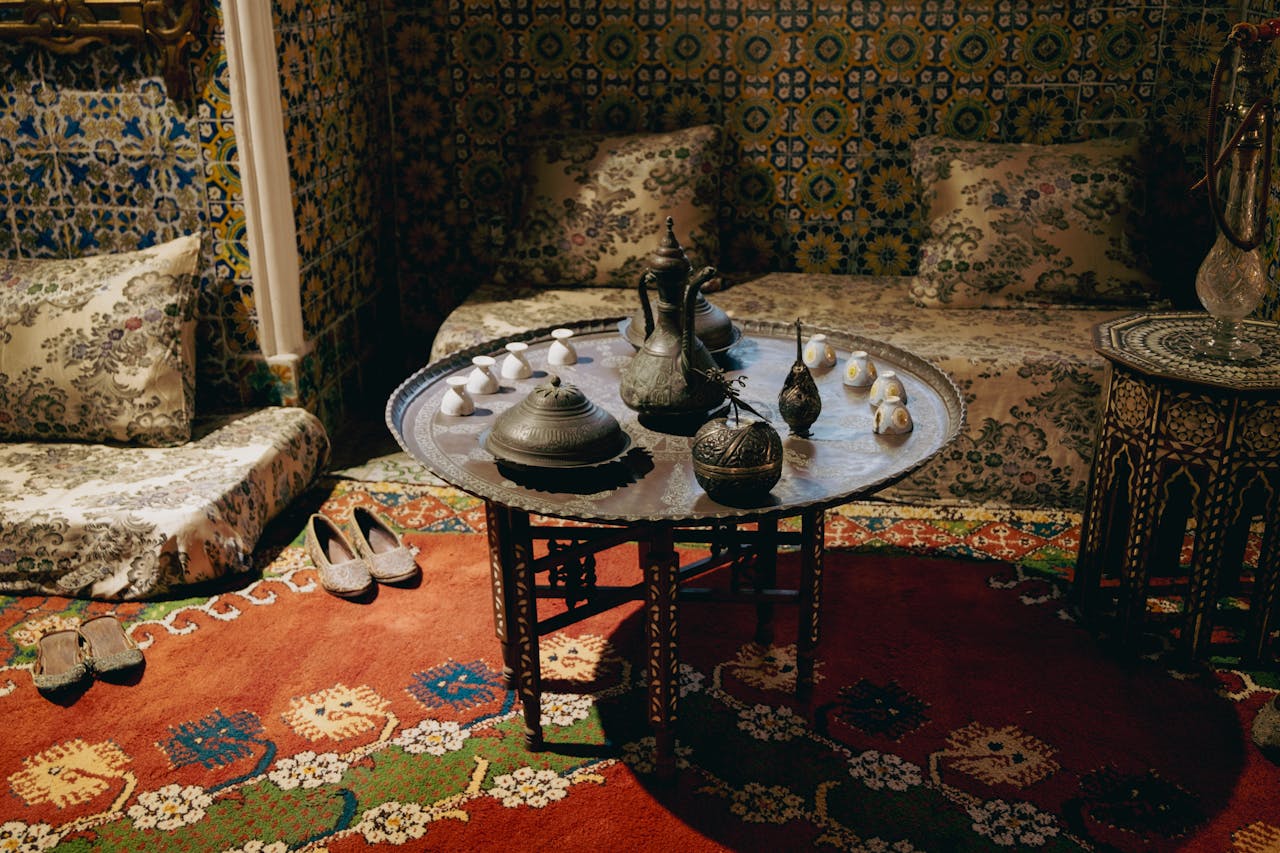
- **Take your time:** The carpet-buying experience in Turkey involves tea, conversation, and the unrolling of many carpets. Good dealers are educators as much as salespeople. Allow at least an hour for a serious purchase.
- **Ask about provenance:** Where was it woven? By whom? What materials? A confident answer indicates quality.
- **Negotiate:** Prices are not fixed; negotiation is expected and part of the cultural ritual. Start at approximately 60–70% of the asking price and meet in the middle.
- **Shipping:** Most reputable dealers offer international shipping with customs documentation. This is often safer than transporting a large carpet as checked luggage.
- **Best areas to shop:** Ürgüp's old town and covered bazaar; Göreme's boutique craft shops; Avanos (for ceramics alongside kilims).
· 2 min read
Buying Carpets & Kilims in Cappadocia: An Honest Guide to Turkey's Greatest Art Form
Turkish hand-woven carpets and kilims are among the most beautiful objects you can bring home from Cappadocia. Here is how to shop wisely, what to look for, and how to avoid tourist traps.
Your stay
Let the story continue — in a cave of your own.
Wake to fairy chimneys, breakfast in the courtyard, the valley at your door.
Check availabilityKeep reading